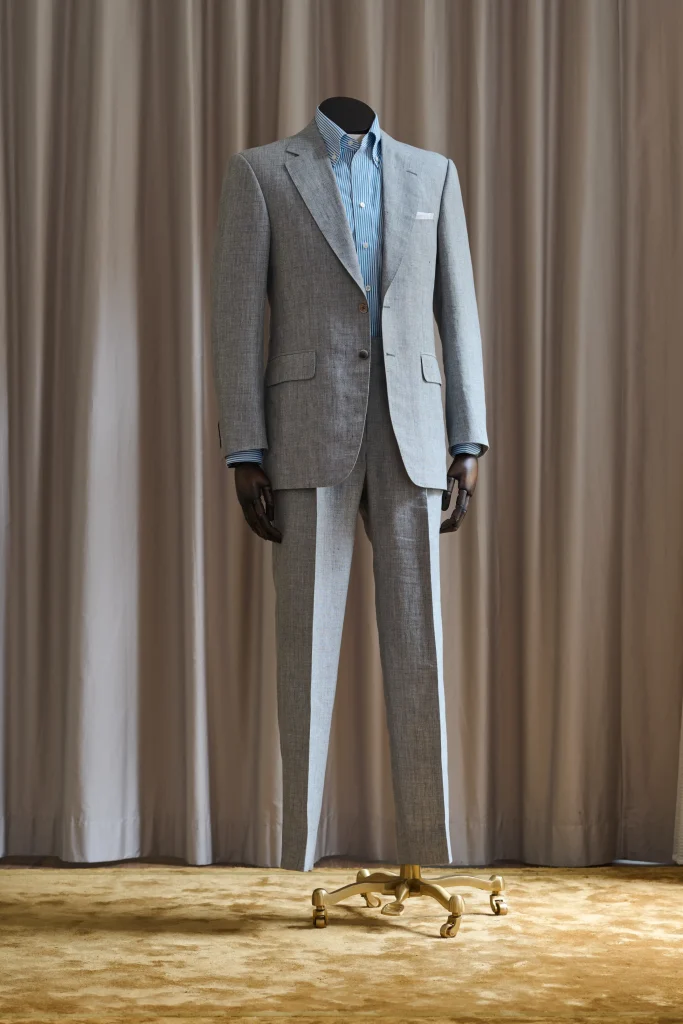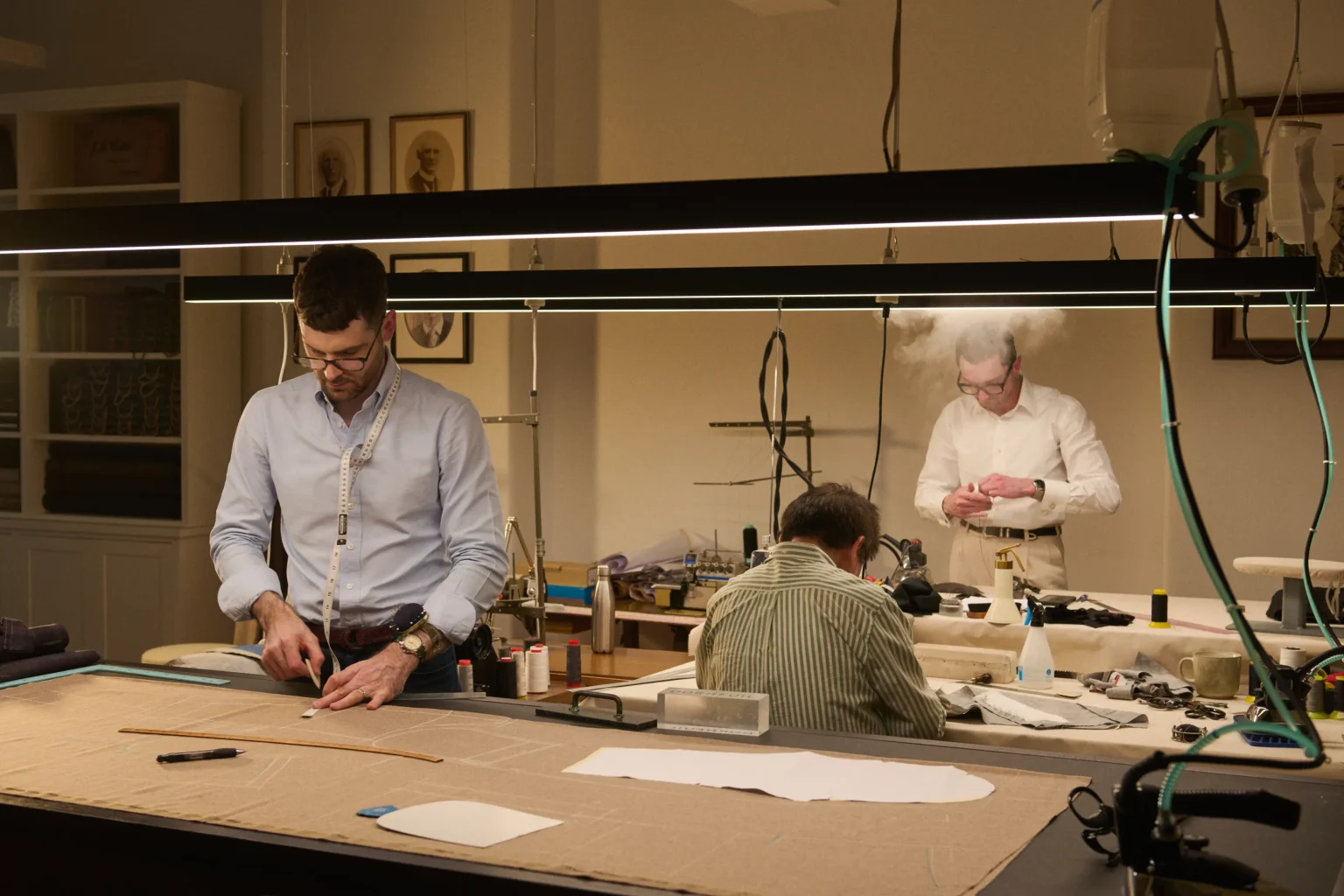
Bespoke to the core. We cut and make all of our pure-bespoke tailored garments in our atelier at 249 Pitt Street, Sydney.
A fact of bespoke defines it as a craft: every bespoke garment is affected in a unique way by the individual who makes it. Aspects of style can be standardised within a tailoring practice to an extent, but there will always be some signature of the craftsperson in the garments they have created.
To describe every step involved in the creation of a bespoke suit even briefly, would be to create a work of interest only to another tailor. But knowing a bit about what takes place before and between the fittings you attend as your bespoke suit, jacket or trouser is created will help you differentiate between the real thing, and a bespoke-washed imposter. This page touches on what we regard as the four pillars of true bespoke tailoring by highlighting some processes that occur in the atelier.
To learn more about your experience as a first-time client of J.H. Cutler see our Bespoke Tailoring page.
I.
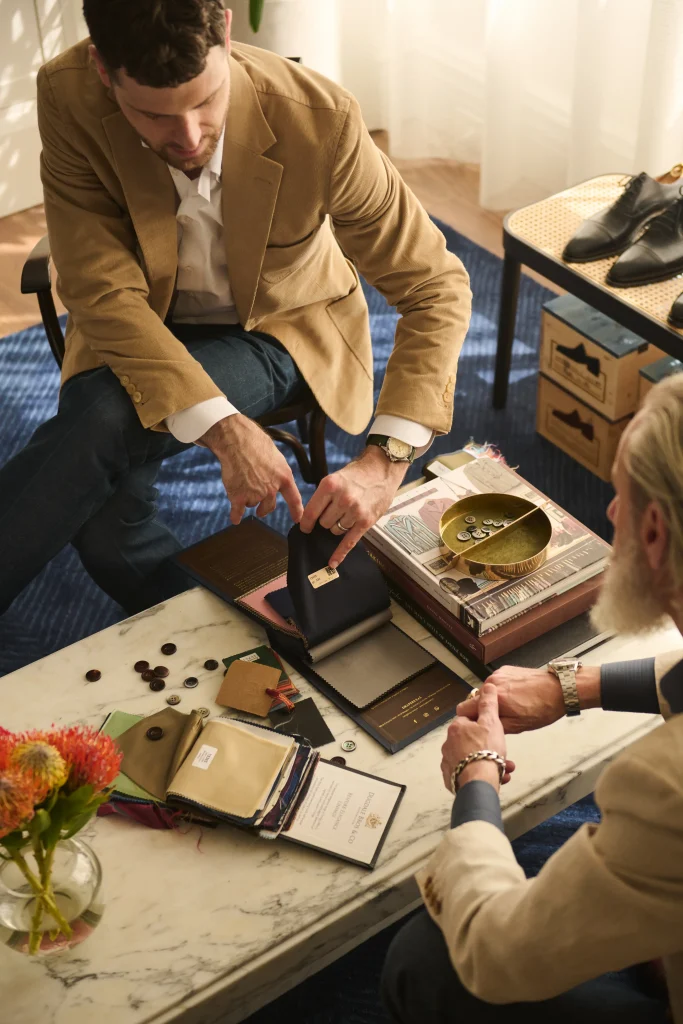
Fabric selection: careful selection of fabrics helps ensure the success of the stages that follow, the tailor’s experience informs and guides this decision.
II.
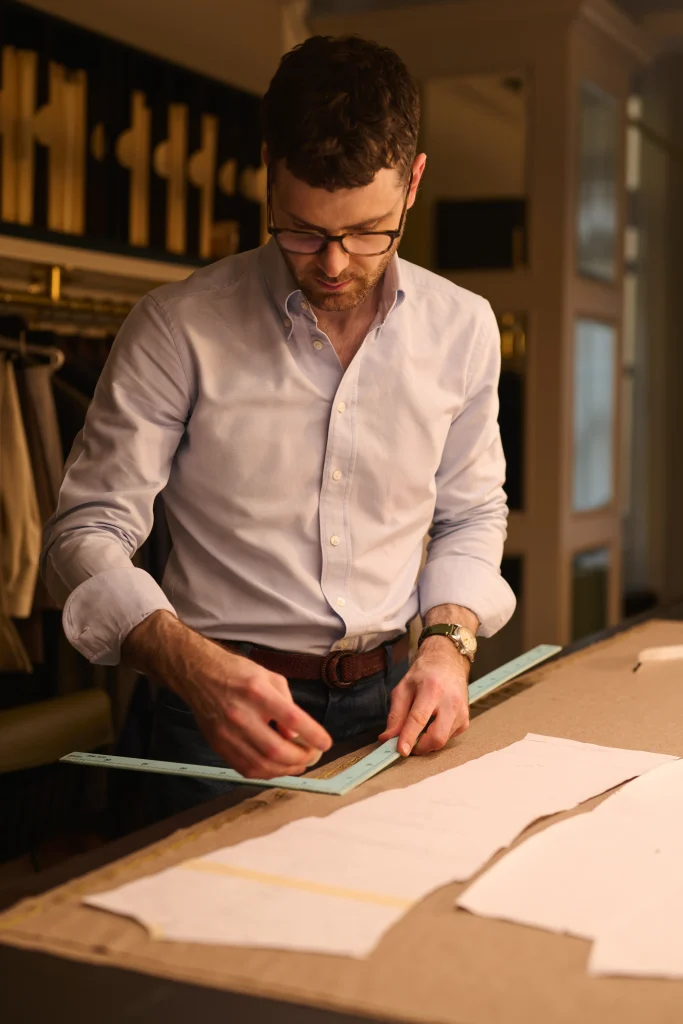
The pattern: is cut after you are measured and is a working document, revised and adjusted as the cutter works toward the vision you are shaping together.
III.
Trimmings: are the many components other than fabric which make up a bespoke garment. Selecting them with care is as important as the selection of the cloth itself.
IV.
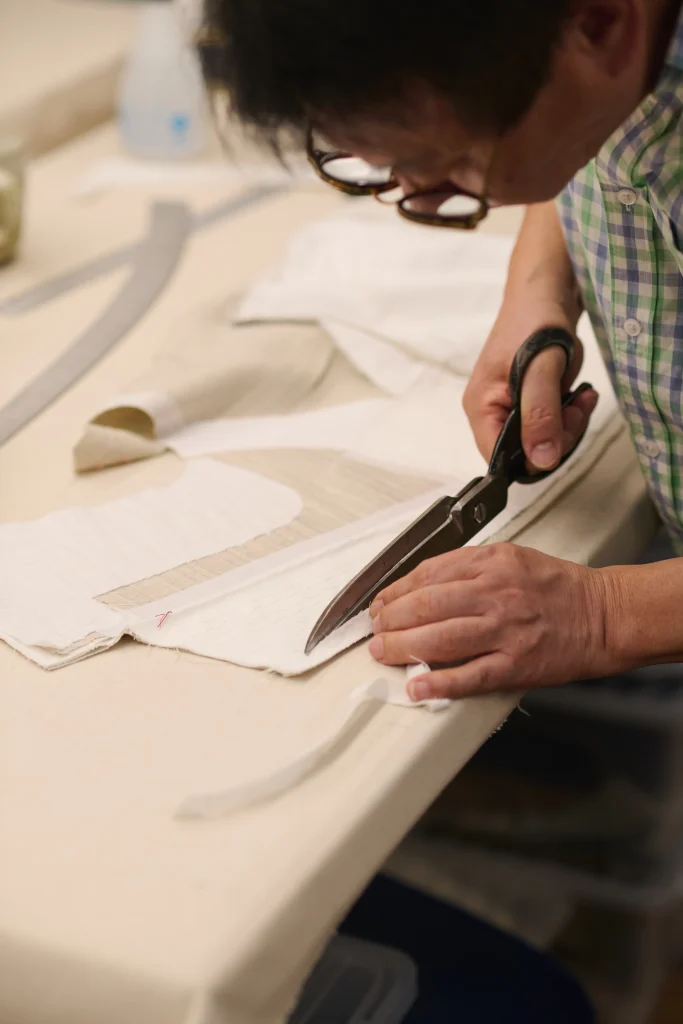
Craftsmanship: methodical and rigorous, it shapes the garments, and cannot be industrialised without compromise. This is where much of the time is spent.

The importance of fabric selection cannot be overstated. One of the questions most frequently asked of the tailor in a consultation is ‘do you have a larger piece of this fabric’. The answer is typically ‘no’, and it marks the moment when a client who is new to bespoke tailoring begins to appreciate the small leap of faith they will be required to make.
This is the first opportunity the tailor has to earn the trust that the process requires, and many more will follow.
The fabric selection process during the first consultation will usually start with a number of questions about the intended use of the garments, how frequently they’ll be worn and in what conditions. These questions help establish which cloth books, known as ‘bunches’, will be the best starting point. The purpose is to narrow the selection down according to the appropriate ranges for weight and weave, the fibre composition of the cloths, and their fineness.
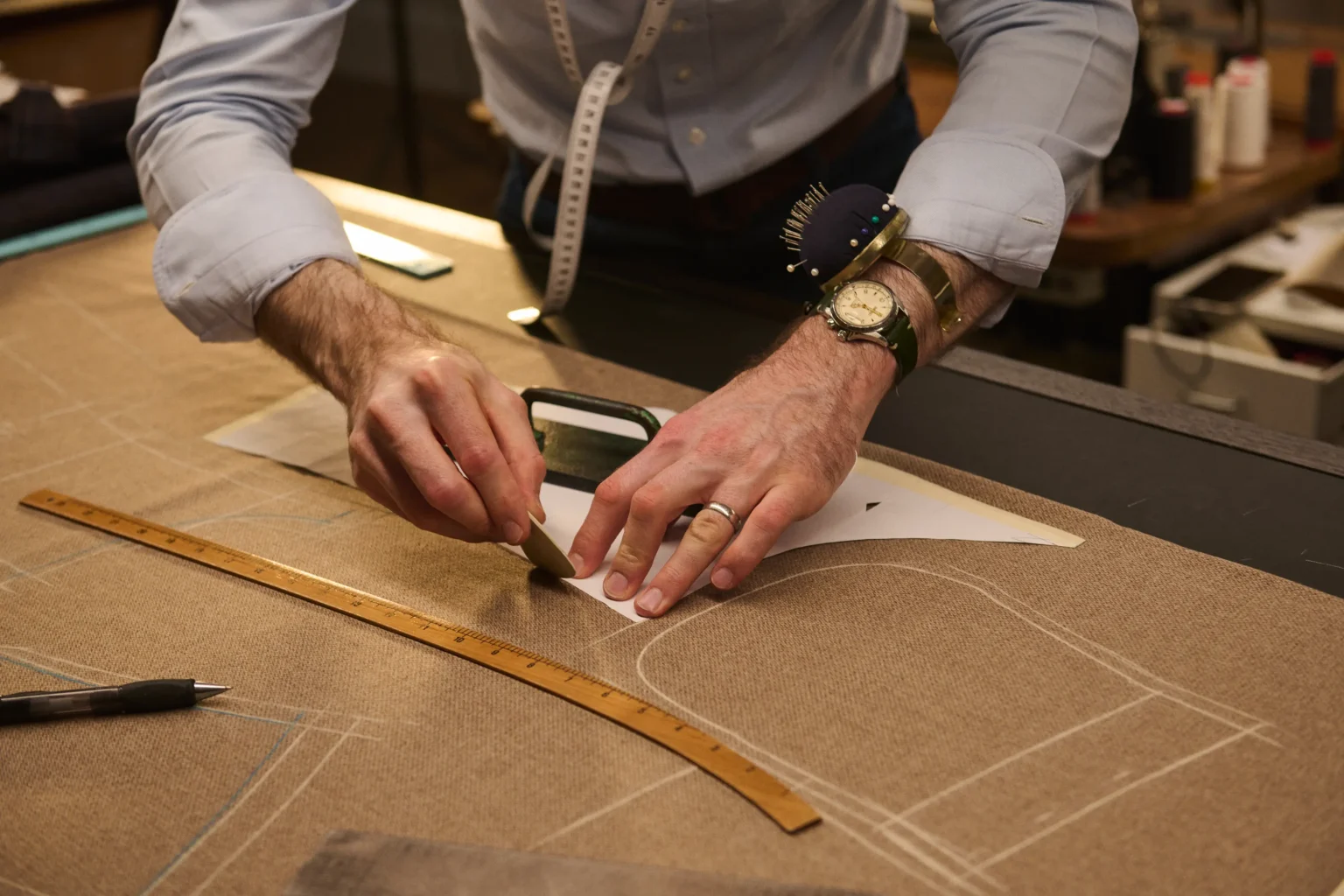
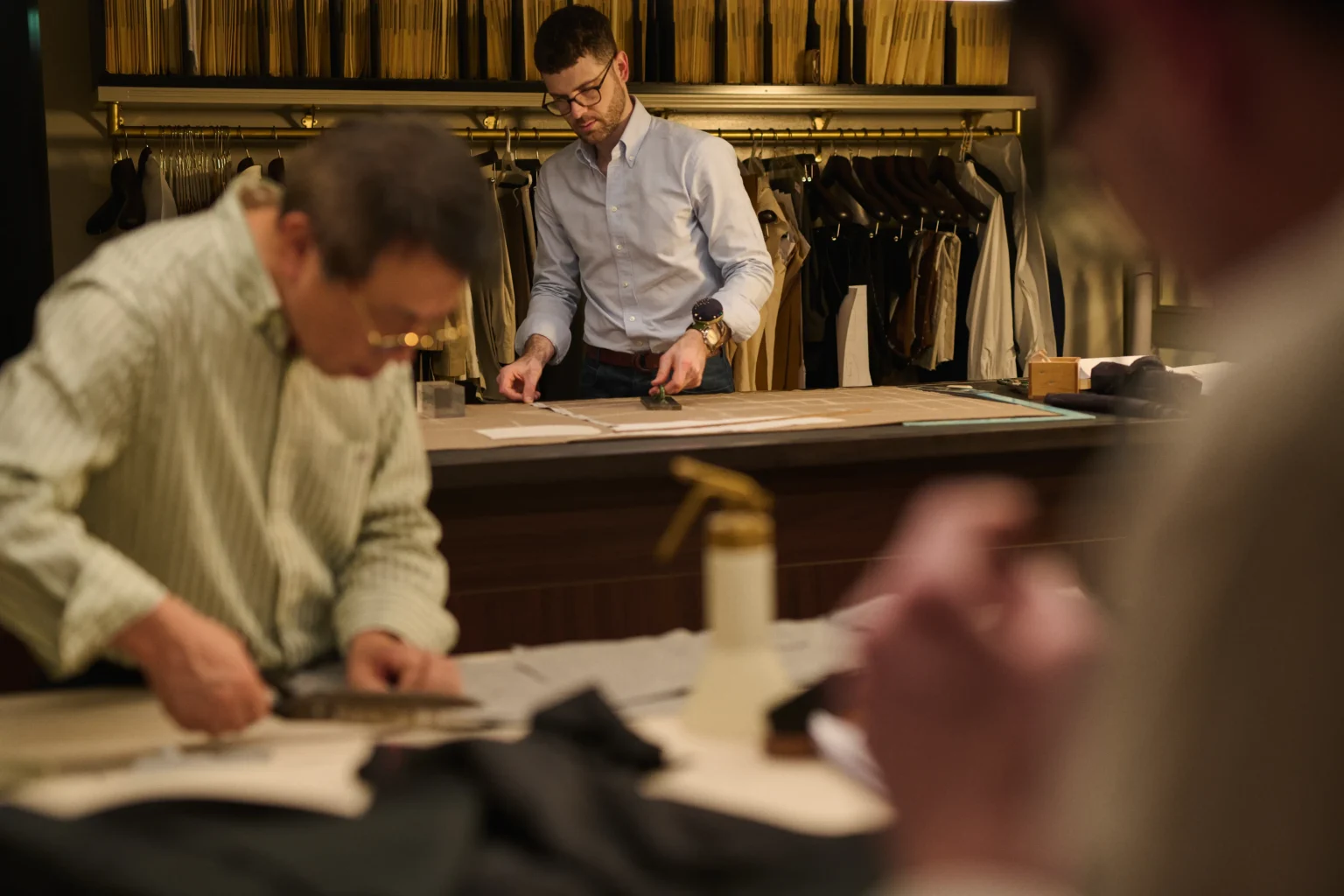
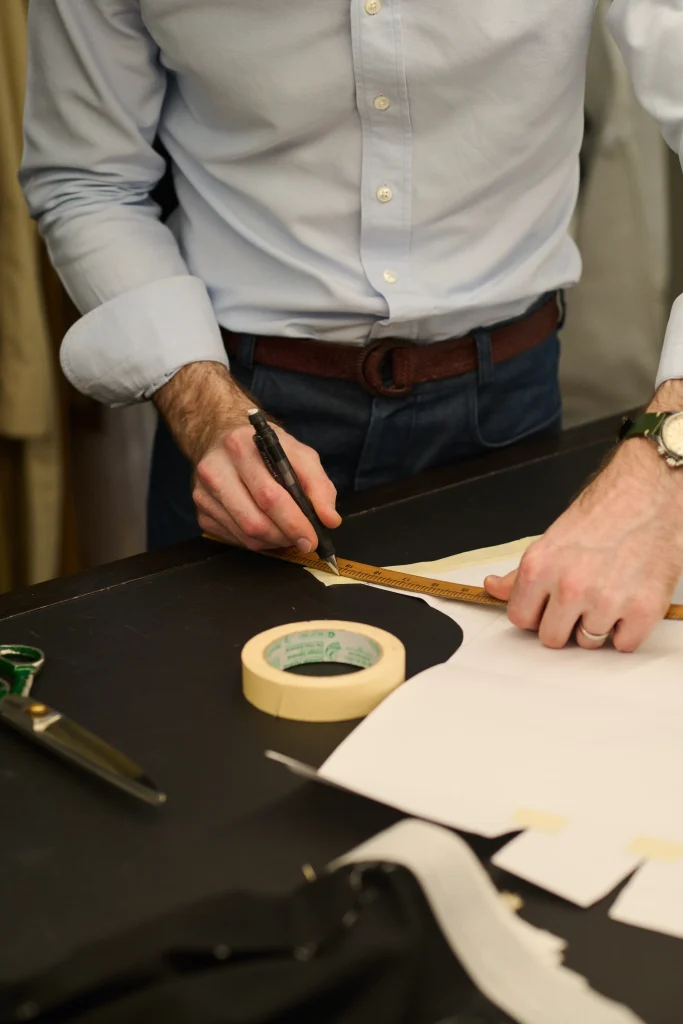
Before any other work can begin, the cutter drafts and cuts the pattern. This pattern is then used to cut the garments from the fabrics selected by the client. The cutter is responsible for the pattern’s maintenance throughout the process.
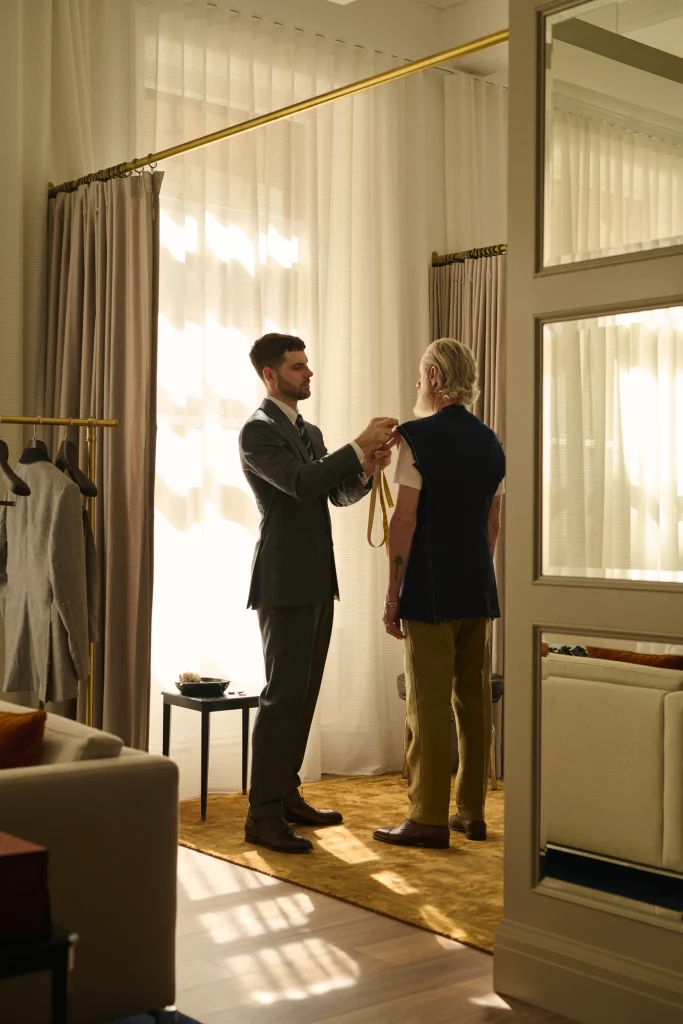
Every bespoke suit, jacket, coat or trouser begins with the work of the cutter, but its completion is a collaborative effort between specialists. At J.H. Cutler the head cutter is Sam, who conducts every consultation and fitting. The observations he makes during the fittings are later translated onto the pattern, and the garments, as they are taken apart before being re-worked. This occurs between every fitting, and is a critical juncture requiring focus, because each stage marks a point of no return as one or more key features of the garment are finalised. An exception to this would be when a fitting is repeated, if a major adjustment has to be checked before he is comfortable taking the work forward.
The number of actual fittings is not capped at three, but generally there are three distinct fitting stages, each marking an episode of advancement towards the garment’s completion: the ‘baste’, the ‘pocket baste’ and the ‘forward fitting’.
The first fitting, or ‘baste’, is so called because the garments are assembled with firm but impermanent stitches called basting. This method of assembly, combined with the fact that a lot of extra cloth or ‘inlay’ is left in cutting, allows for significant alterations to be made to the proportions and style before progressing. It is an opportunity for the tailor to assess the cut, and for the client to gain their first impression of what they’ve commissioned. At this point almost the entirety of the assembly has been done by hand with a needle and thread.
The term ‘pocket baste’ refers to the second fitting stage. As the name suggests: the outside breast pocket, and the side pockets of the jacket will be made at this point, giving it more form and definition. It now resembles a garment, leaving a little less to the imagination. The side seams crossing over the pocket opening will have been finished with machine stitching, while the rest of the jacket will have been basted back together. The trouser fronts may have finished pockets, but the back panels are left unfinished and basted in place.
A ‘forward fitting’ is usually stage three. The jacket will be quite advanced, with the pockets, lapels and sometimes shoulders all completed. Sections of the lining will also be in place within the jacket. Although only the sleeve and collar are usually left incomplete at this stage, there will still be 15-20 hours of work remaining before the garment is completed, with the sleeves alone taking a full day to make before they can be inserted. The trousers may be nearly complete at this stage except for the length, to allow for fine tuning.
I.
Understanding how to correct the issues identified at each fitting, and translating those corrections to the pattern and the garment is its own specialisation. Fluency takes years to develop, and is difficult to acquire without the guidance of an experienced mentor.
II.
The bespoke process is repetition. Garments are assembled and then taken apart again between every fitting. The importance of the ‘inlay’, or extra fabric left when the garments are first cut, becomes apparent as the pieces are subjected to one adjustment after another.
III.
The cutter’s task of refining a new pattern through the fitting stages demands a balance of self-assurance and restraint. As the cloth cannot be un-cut, it is important to exercise caution where the result of an adjustment is uncertain, or a client is unsure about a detail.
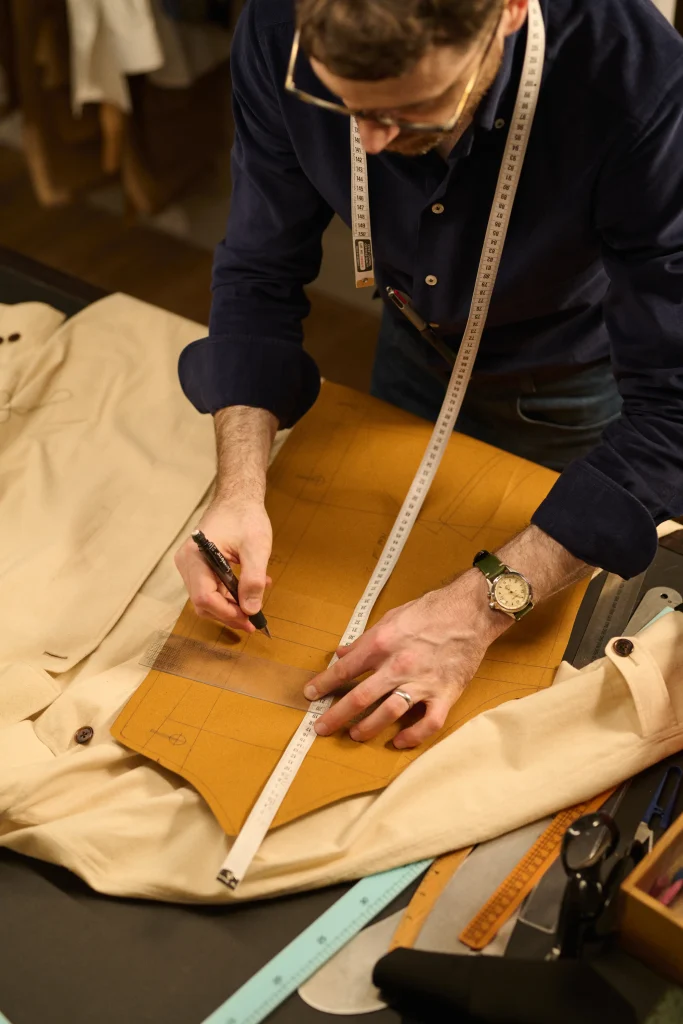
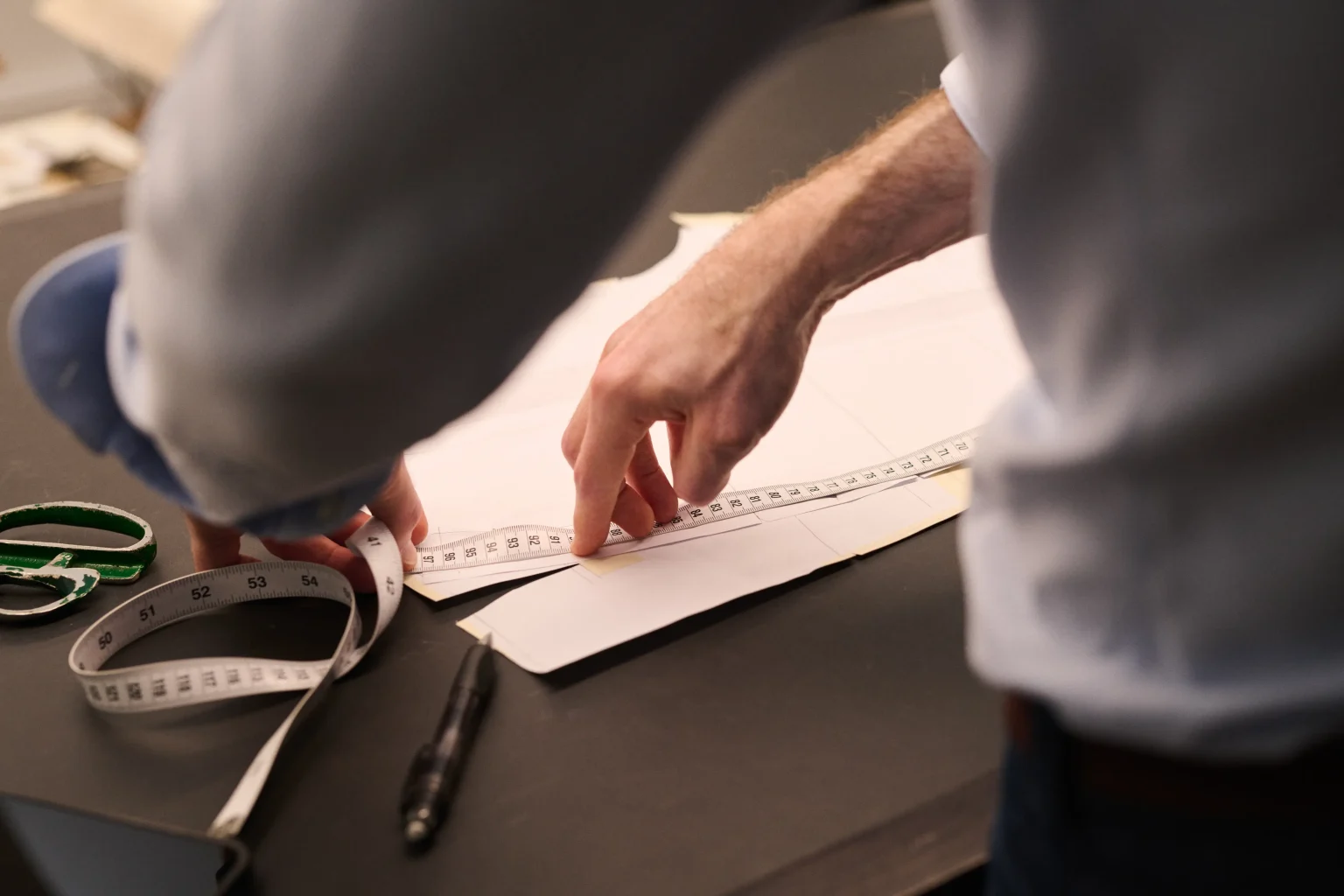
Pattern making for bespoke is different from pattern making for ready to wear. Apart from the obvious fact that a bespoke pattern is created for an individual, not a demographic, there are other factors that make this method specific to tailoring. For example, seam allowance is omitted from some edges of the pattern and specific amounts of ‘inlay’ are left instead when the garments are cut. This is to allow for adjustment between fittings, but also because the specialist tailor constructing the garment will cut and shape certain sections of the garment by eye, and not all of the required nuance can be incorporated into a flat paper pattern.
I.
The lapel is one of the most important features of a bespoke jacket, and is applied for the forward fitting. To craft one that is in harmony with the other features of the garment, as well as the proportions of its owner, requires nuance and precision.
II.
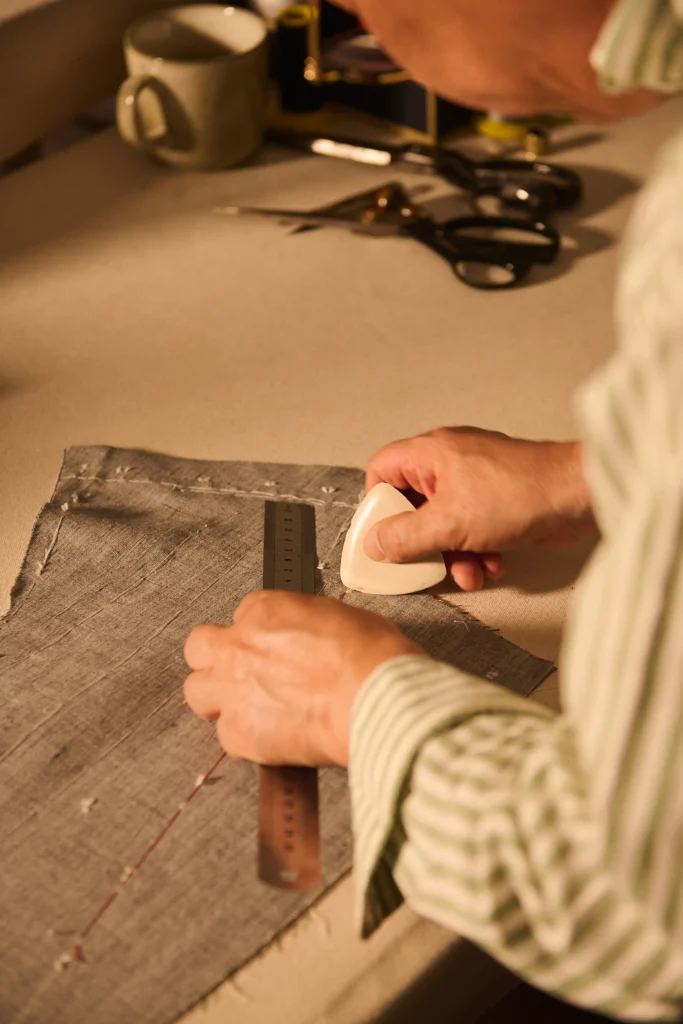
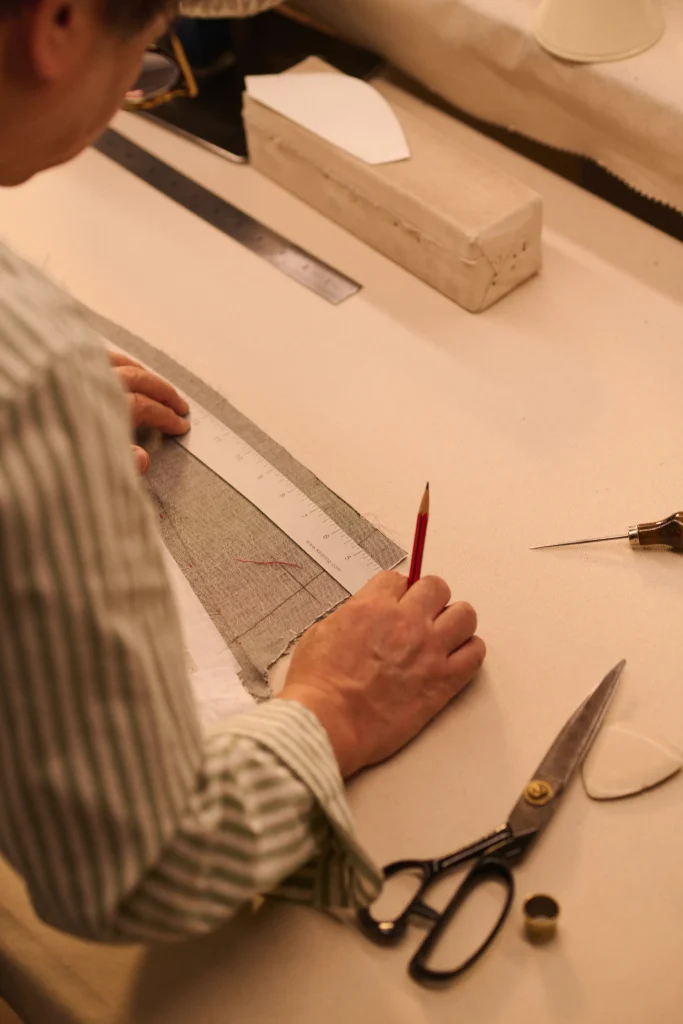
The lapels draw the eye and define the first impression made by the garment. They extend down its full length and must be absolutely symmetrical, so their shaping and assembly requires a particularly careful approach involving over a dozen steps.
III.
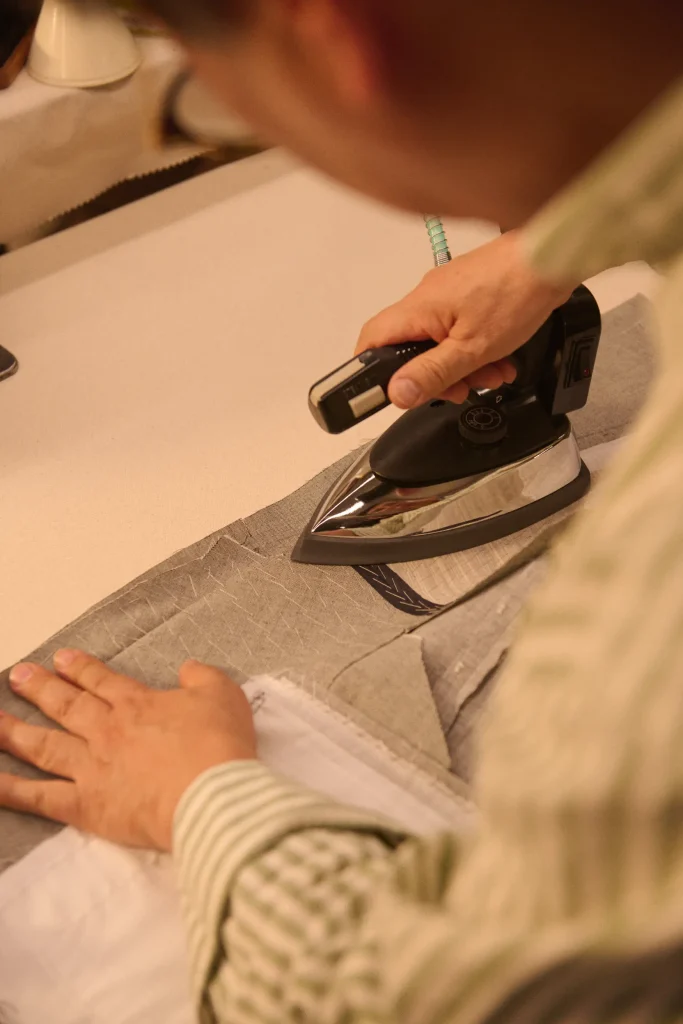
This is one of the many stages in the making of a bespoke jacket that requires the use of an iron to create form that will endure for the life of the garment. Heat and moisture shape the cloth and canvas before delicate stitches set it in place.
IV.
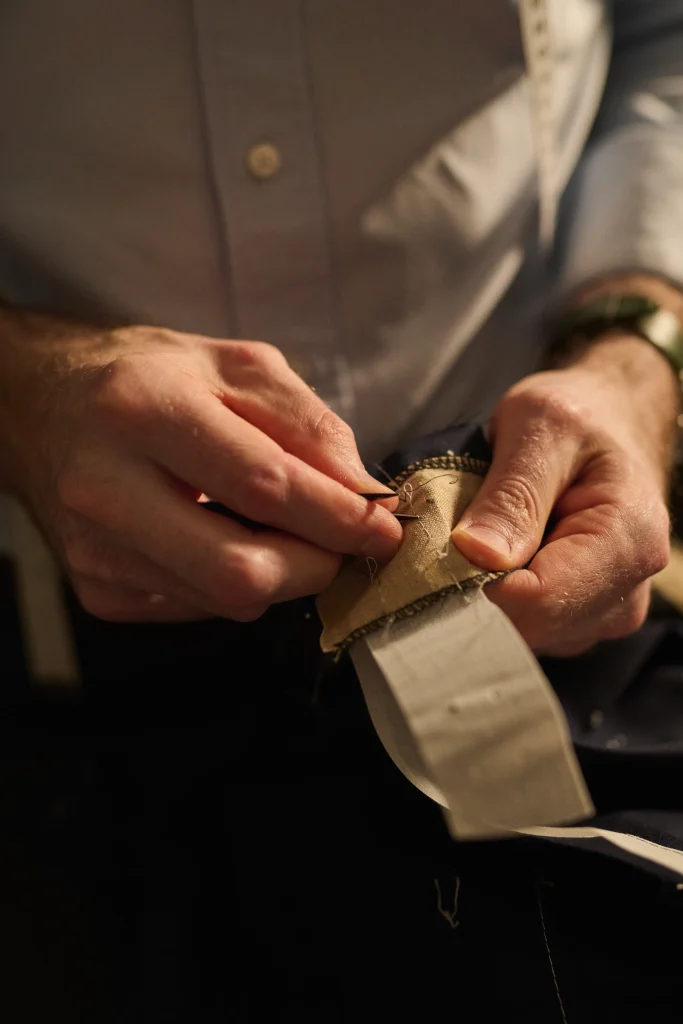
Many techniques used in making a bespoke jacket are a form of preparation: an area is moulded into shape, sometimes by the manipulation of the hands while stitching, or with the iron, then a carefully placed machine or hand stitch locks in that shape.
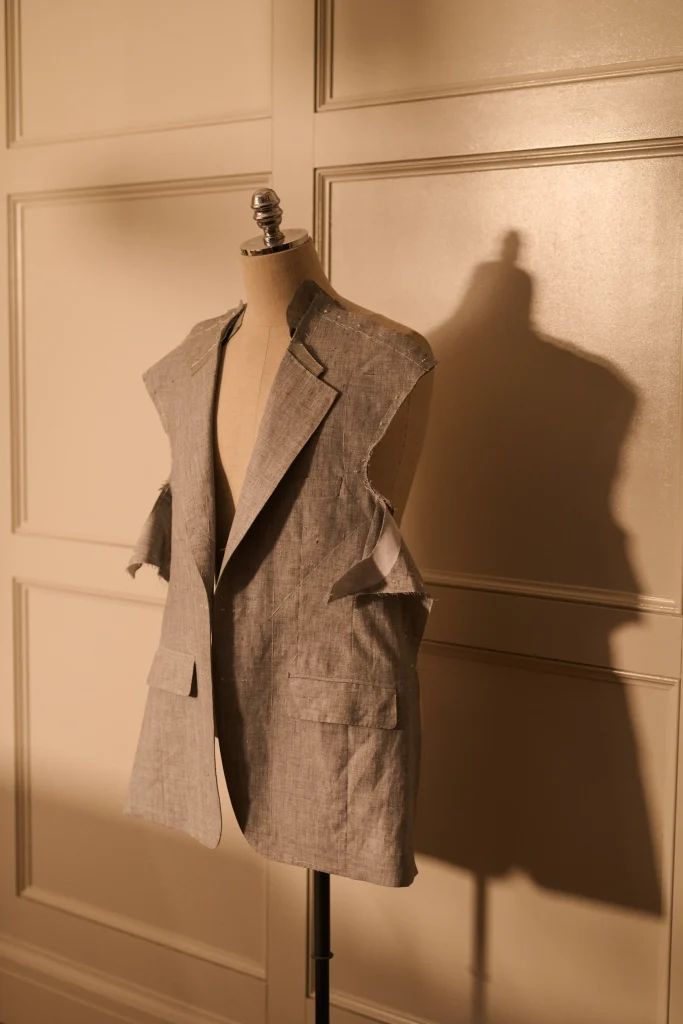
The use of the hands in the making process, manipulating the cloth with heat, steam and the pressure of an iron, in a way that accounts for the peculiarities of a specific fabric, is highly nuanced and contributes much to the way the garment will look and feel. This painstaking work leaves no easily identifiable trace, unlike the hand stitching that forms a button-hole or defines the edge of a lapel, but it is felt when the garments are worn.
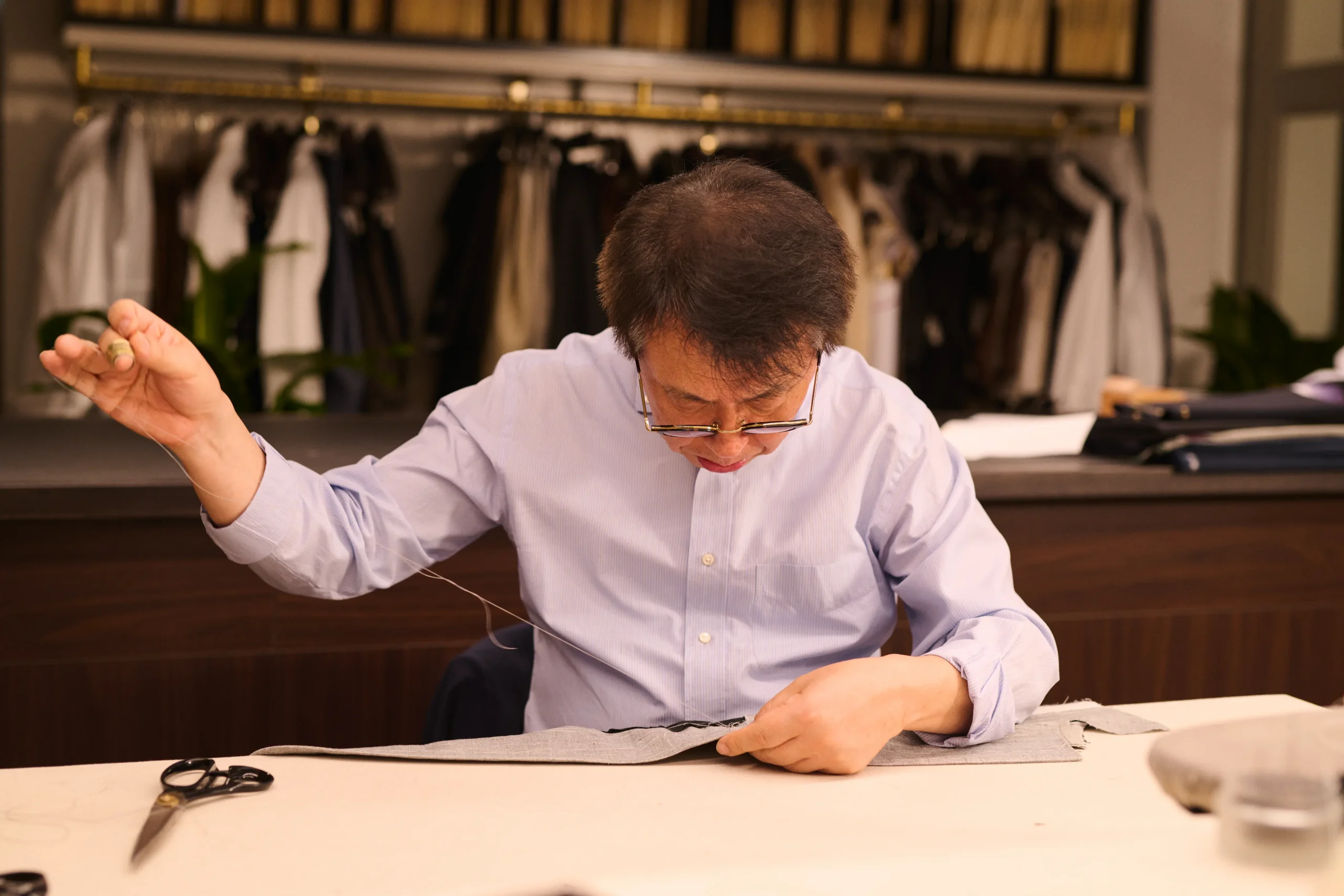
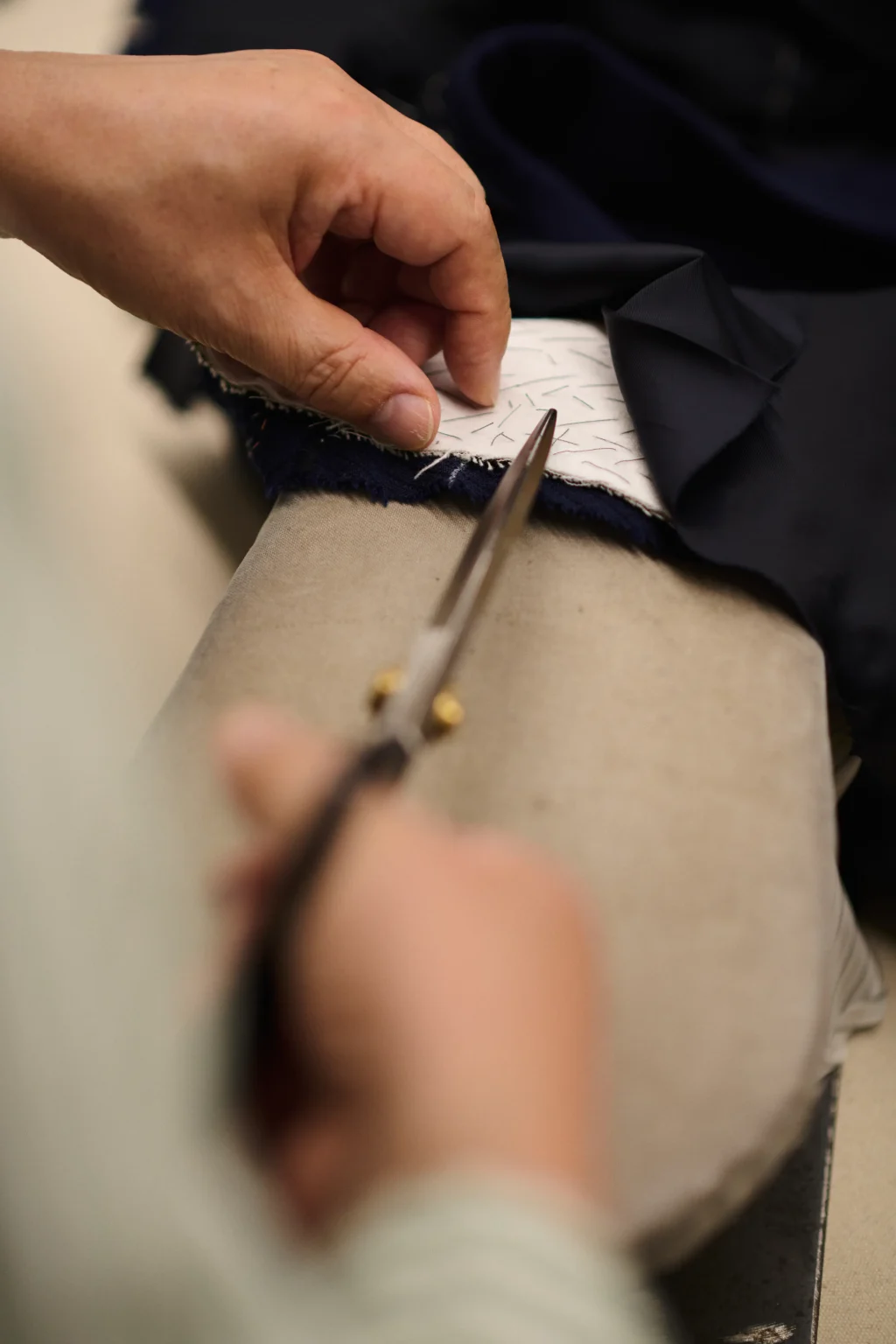
Similarly, the intricate pad stitching that holds together the layers of the jacket’s canvas, and forms the shape of its lapels, must be done with one hand stitching while the other holds and gently shapes the layers of fabric simultaneously. This work is almost invisible on a finished garment, but is the hidden foundation of its three-dimensional form, without which it would be flat and shapeless.
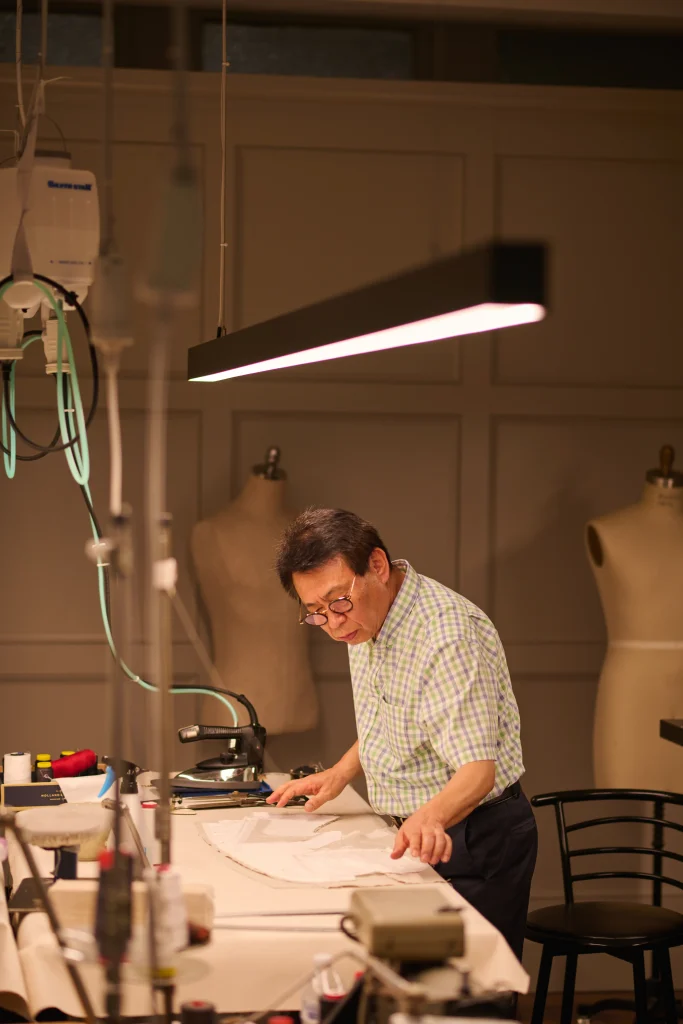
I.
A bespoke trouser pattern is refined over two to three fitting stages. Once a client’s pattern is developed, only one or two fittings are required for future orders.
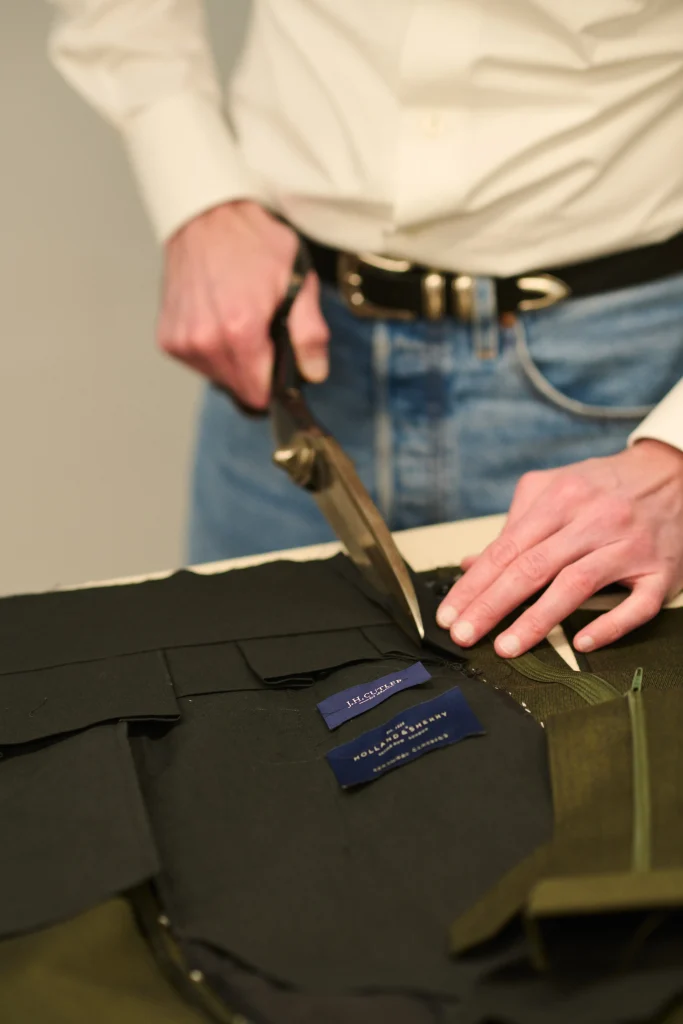
II.
Crafting a bespoke trouser of this standard requires mastering the use of two industrial sewing machines: the single needle lockstitch, and the overlocker.
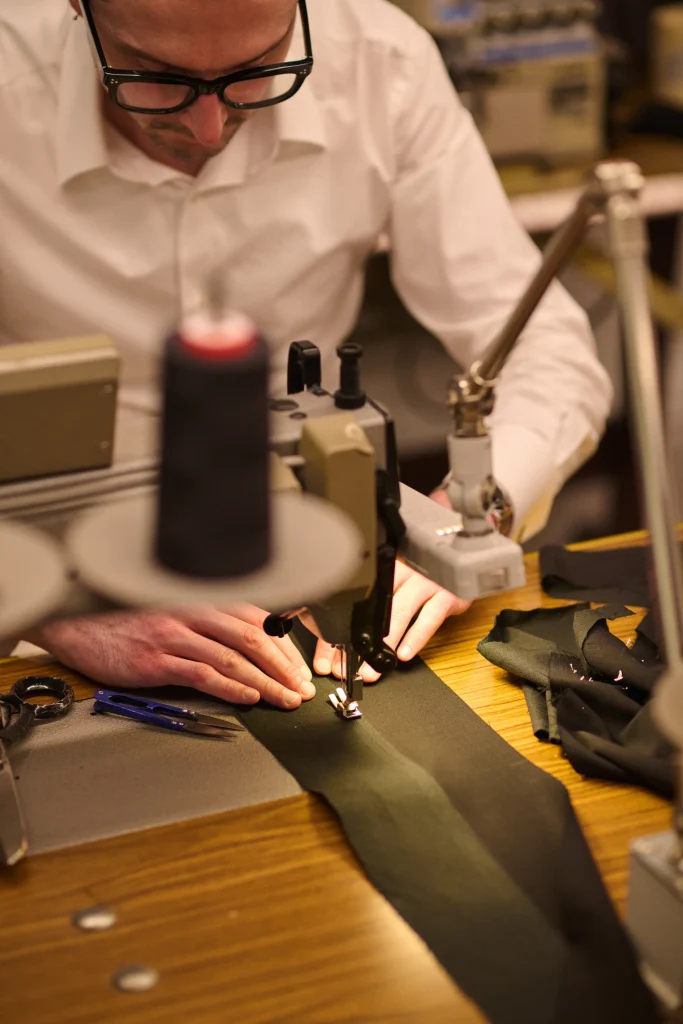
III.
Sturdy machine-sewn seams and intricate hand sewing techniques are used together in our trousers to combine enduring performance with handcrafted elegance.
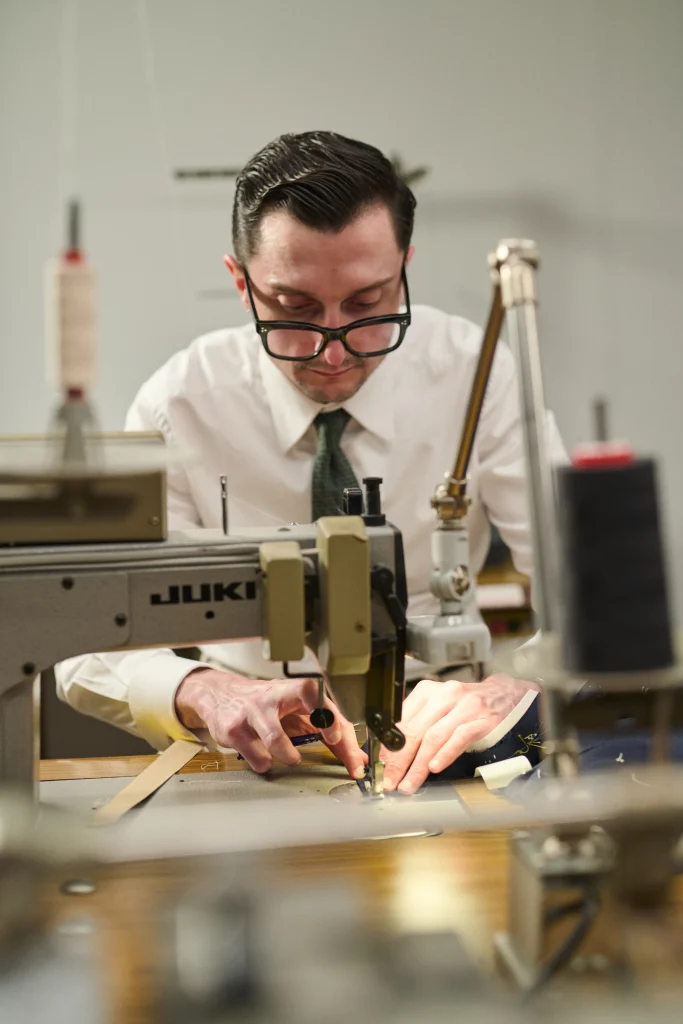
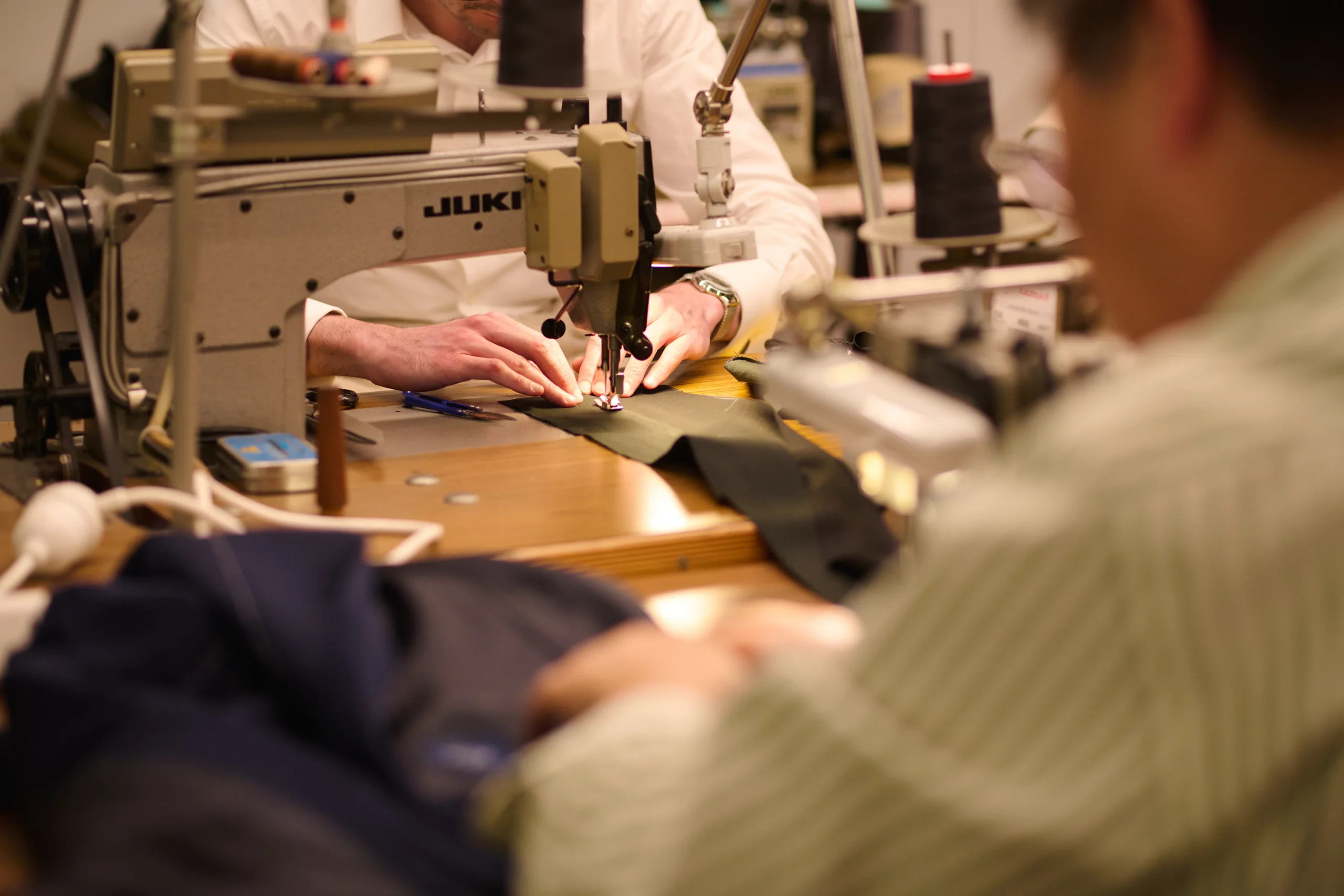
We define a hand made garment as one created in a workshop where skilled artisans use a combination of hand-craft sewing techniques alongside machinery. This method of garment production is distinct from a line in a factory where machinists each perform a specific process involved in a garment’s assembly.
It is important to distinguish between workshop and factory, ‘bench-made’ and ‘line-made’, because the former is a hallmark of bespoke tailoring.
‘Hand made’ should not be interpreted as being assembled without the use of machinery in the context of bespoke tailoring: in fact mastering the use of the industrial lockstitch is a critical skill for a bespoke tailor.
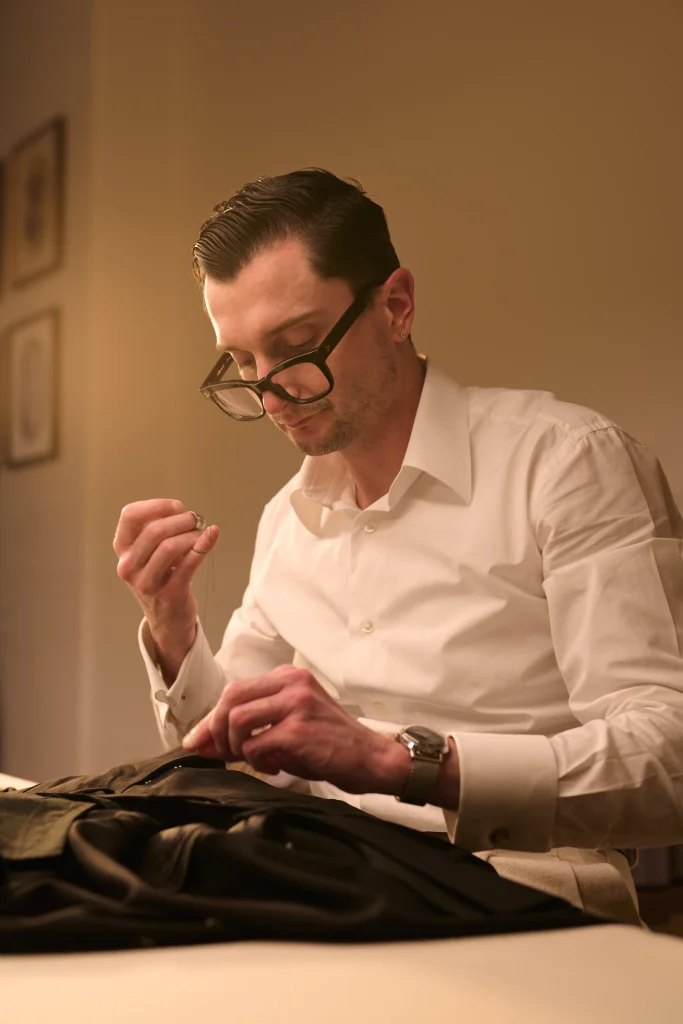
Much attention is paid to a small number of obvious and eye-catching hand sewing applications like buttonholes and topstitching, referred in tailoring as ‘finishing’. For this reason some of these techniques have become gimmicks, sometimes applied to garments produced on factory production lines to create the impression they are ‘hand made’ – the most common example being a Milanese buttonhole on the lapel of a machine made jacket.
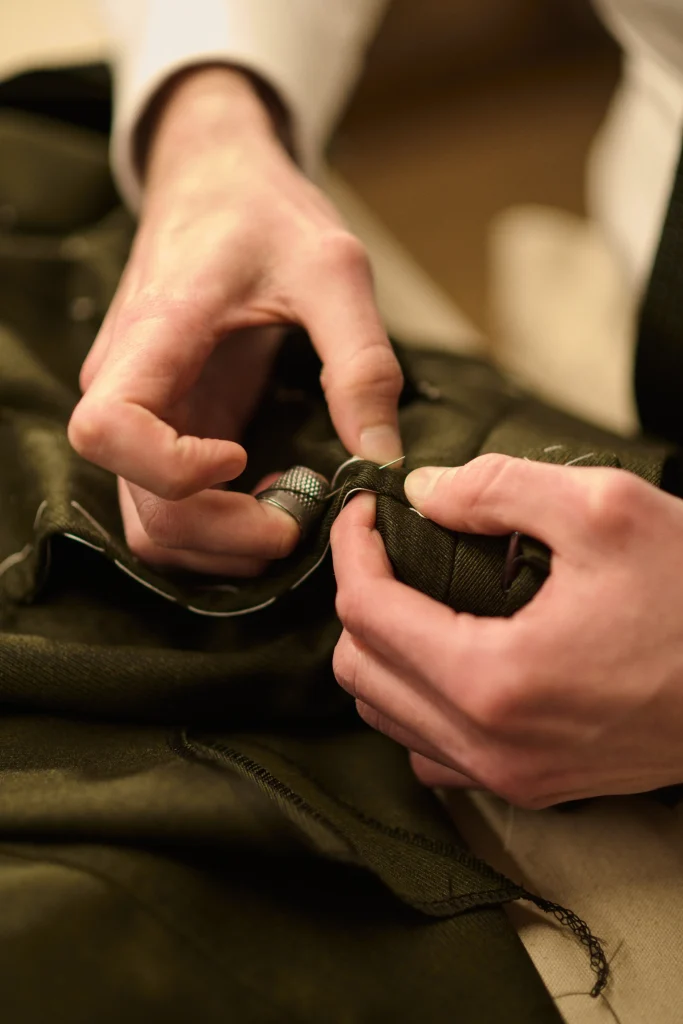
Although details like hand-made buttonholes, bar-tacks and intricate topstitching are beautiful when well executed, they are only a fraction of the hand finishing that is used throughout a bespoke jacket or trouser. The skilled tailor divides the stages of a garment’s assembly to allow for much of the ‘machining’ to be done together, so the hand finishing can then be done in one sitting. In a bespoke trouser this latter stage usually occupies a full day, depending on the style.
Hours of hand finishing work are evident in discreet locations throughout our bespoke garments. Where it is both functional and decorative, such as buttonholes, it is applied using carefully selected silk thread of various thicknesses.
I.
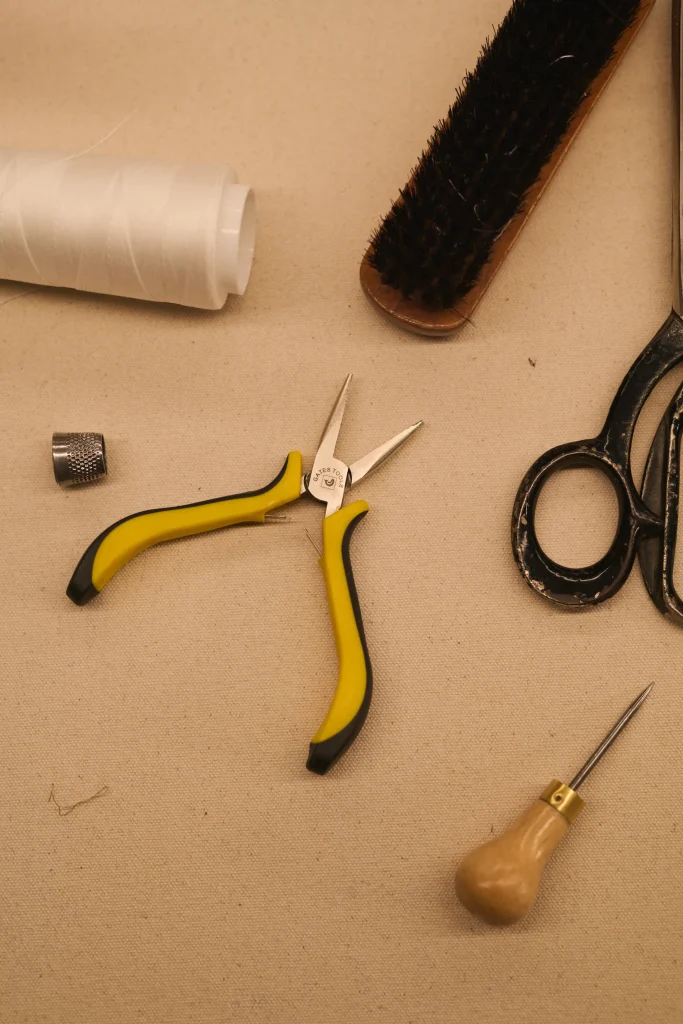
Hand sewing techniques used in making our bespoke trousers include buttonholes, bar tacks, top stitching of seams and pocket edges, attachment of the facing and ‘curtain’ inside the trouser waist, and hemming.
II.
The methodical assembly of our bespoke trousers involves roughly equal time in machining and hand sewing, with each pair taking a craftsperson 15-20 hours to complete depending on style.
III.
The trimmings used in our bespoke trousers include buttons made from horn and mother of pearl, linings from bemberg cupro, with pocket bags, waistband facing and curtain made of 100% cotton.
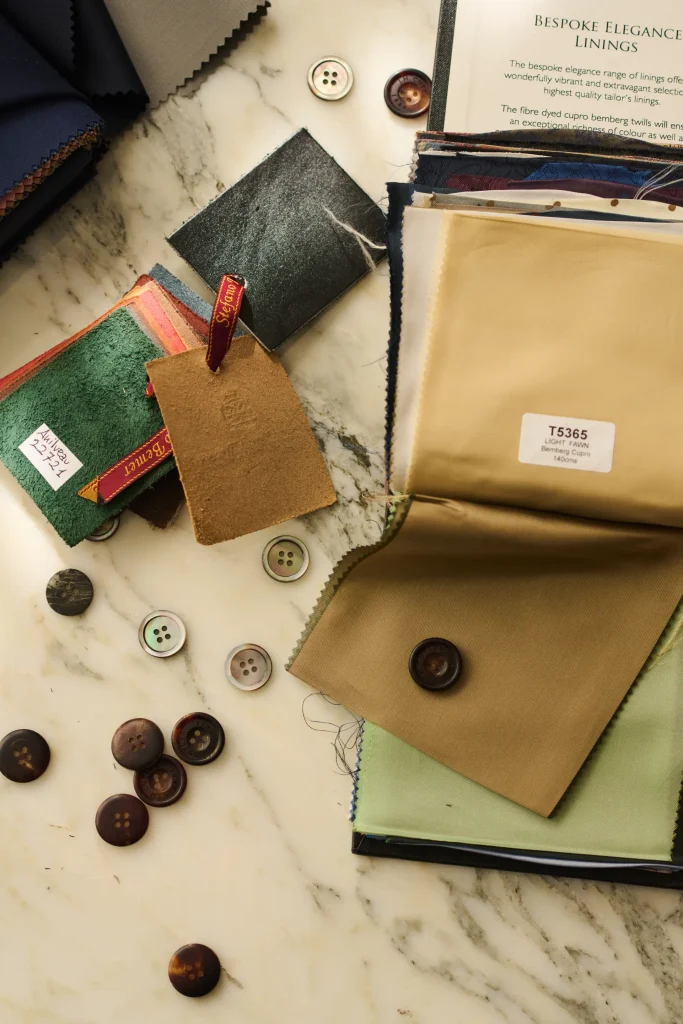
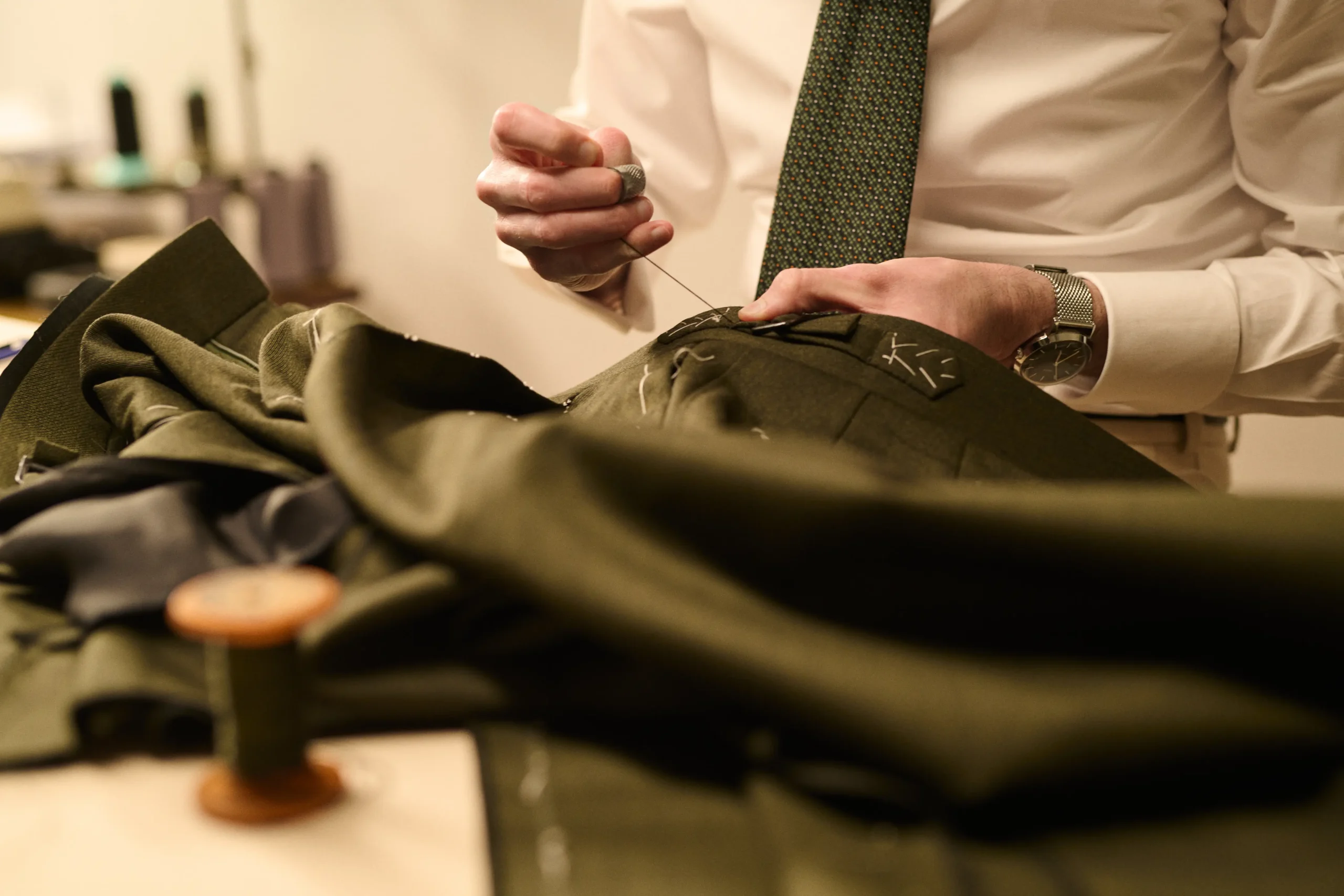
The internal structure of a bespoke garment is its foundation. This foundation is far more complex for a jacket than a trouser, but equally important for the longevity of both. The subtle exterior and interior detailing that enlivens a bespoke garment almost always serves a functional purpose as well as an aesthetic one. The fabrics and threads that these elements are made from are the trimmings, and are sourced by us directly from specialist suppliers and utilised to achieve a result that will endure for the life of a garment. We know what we make, inside out.
The jacket’s foundation includes the canvas that gives the front its contours, but also the canvas of the collar that forms its precise curved shape; the cotton interlining used in the sleeves and side vents to give them weight and crisp definition, and the padding and canvas used in the shoulders and sleeve head. The trouser waistband supports the garment and has to endure a lot of stress. We make ours from canvas and cotton interlining in a way designed to prevent stretching, or curling out of the top edge. The components for each garment are prepared and cut individually.
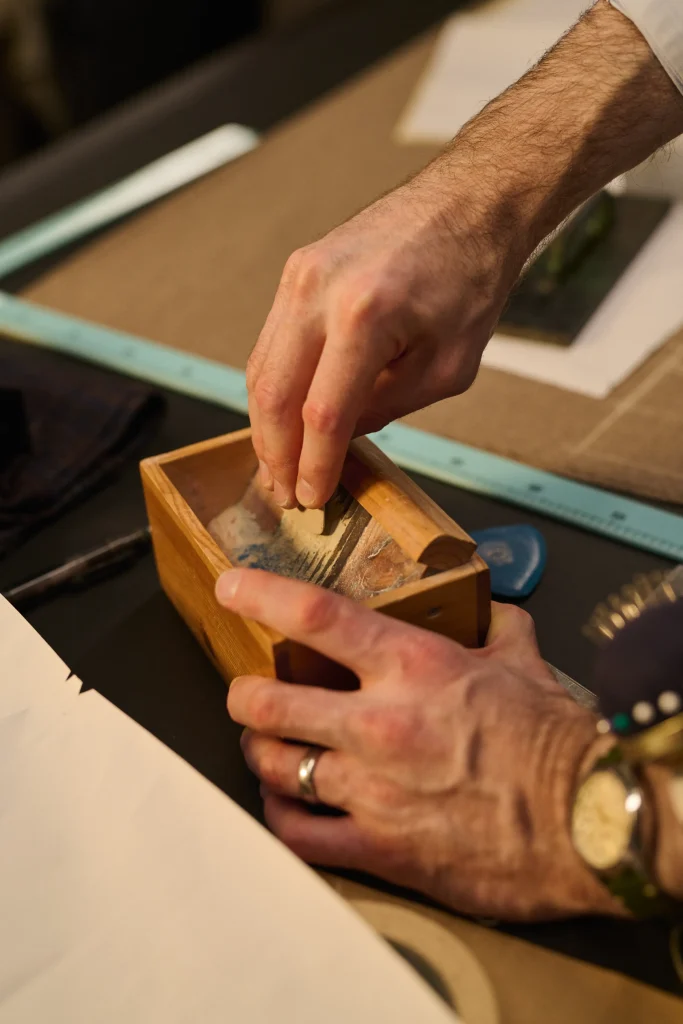
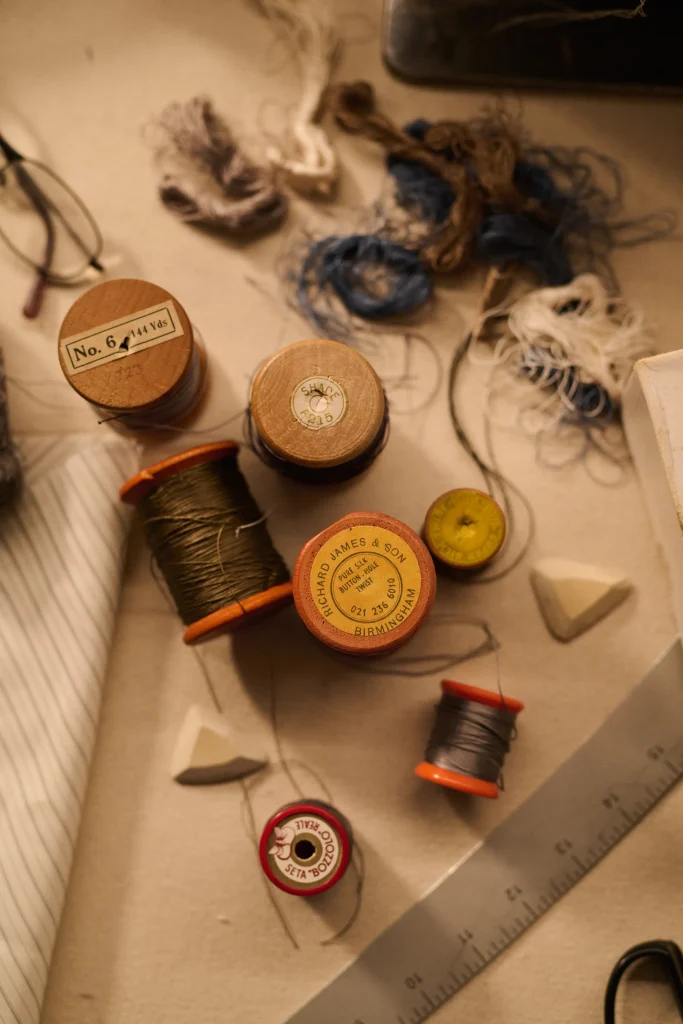
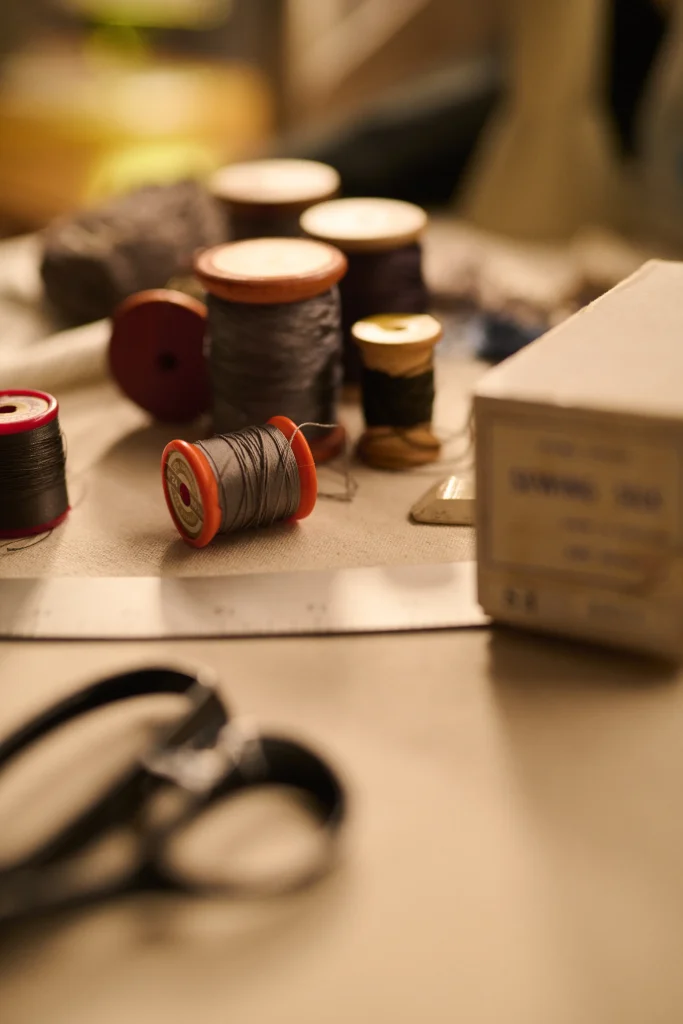
Silk threads are coated with beeswax before being used to hand stitch functional embellishments like buttonholes and bar tacks, for the application of labels, and for most of the topstitching. This helps to prevent knotting of the thread, and lends durability and lustre to the finished detailing. Linings are usually cut from bemberg, a regenerated fibre with a cool touch and silken fluidity, which is more durable and breathable than silk. Buttons are made of buffalo horn and mother of pearl, and selected individually for each garment. Natural or regenerated materials and fibres are used almost exclusively throughout our garments.
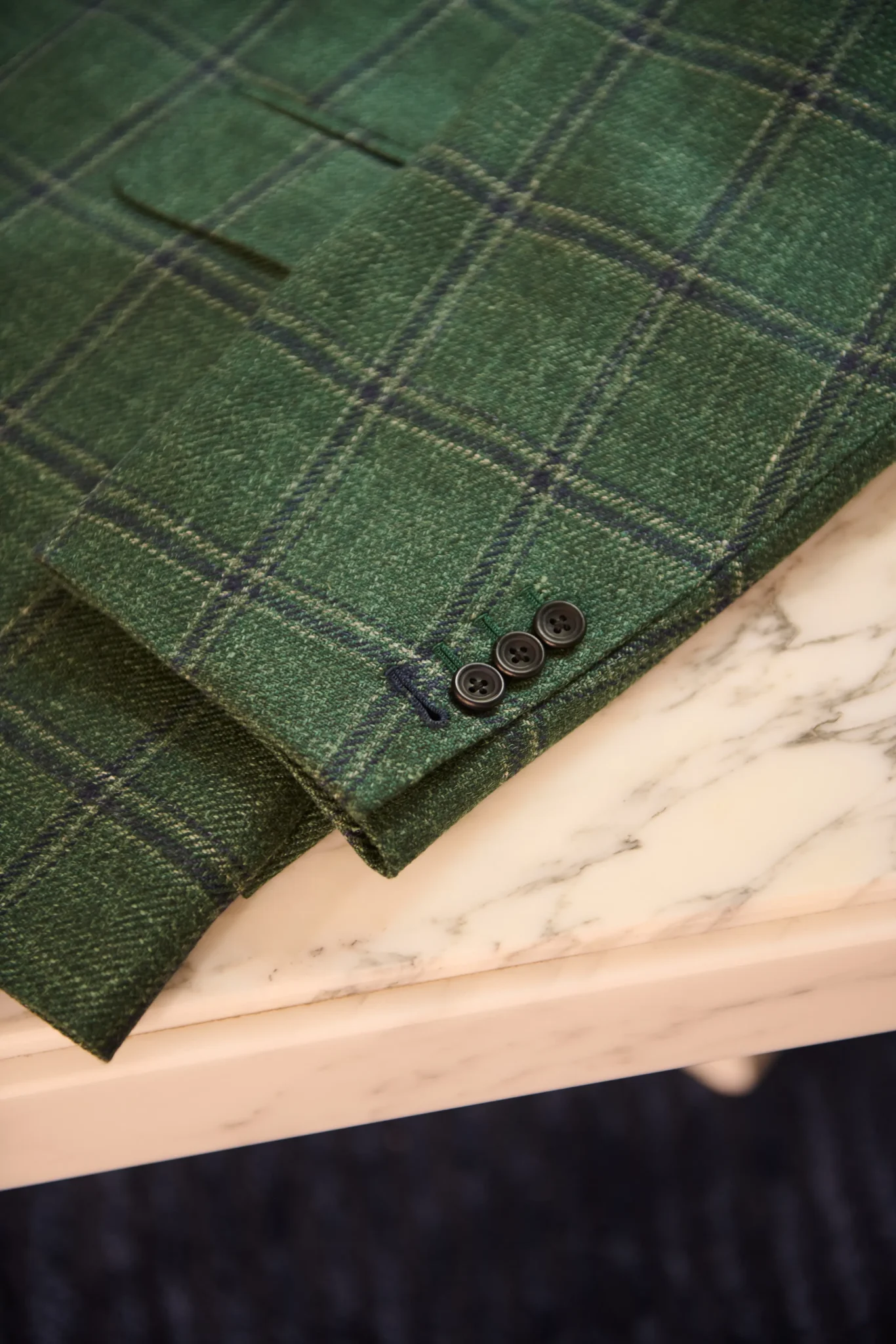
To be truly bespoke, tailored garments must have been made in a way whereby total control over the process and every aspect of the final product is in the hands of the tailor. For us this means cutting and handcrafting our garments on premises.
The four pillars of appropriate fabric selection; the sourcing and expert use of all the components required to make bespoke tailored garments; total control over the pattern, and expert craftsmanship, are essential requirements of true bespoke tailoring.
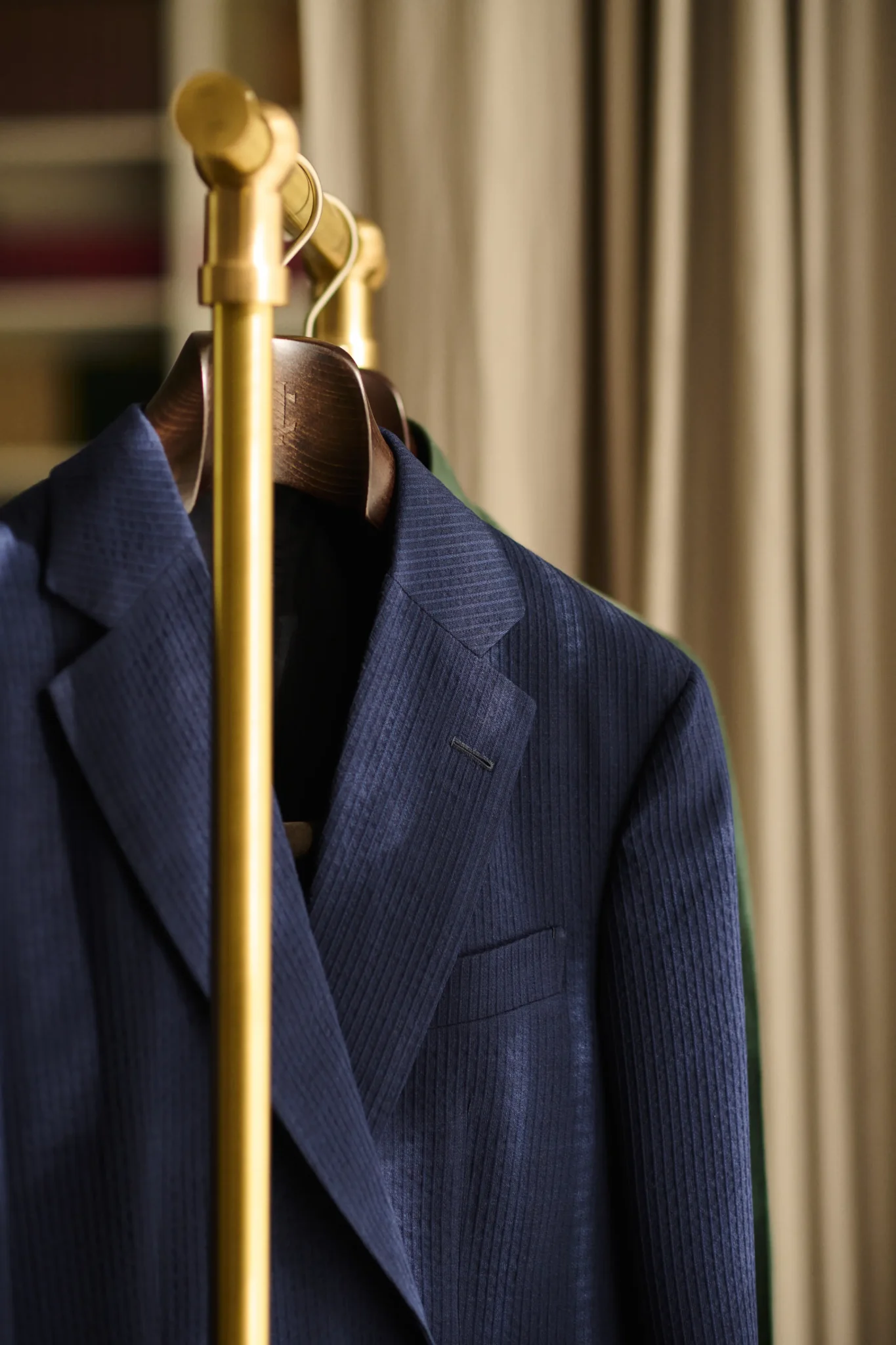
If you are considering a bespoke commission, from us or anyone else, a few questions will tell you most of what you need to know. Is the pattern drafted for you or adapted from a block, and by whom. Where is the garment made. How many fittings are required, and what happens to the garment between them. What is the garment made of, inside and out.
The work described above takes place in our Pitt Street Atelier in the heart of Sydney, the same room in which we meet our clients for consultations, fittings and a friendly chat. You are welcome to see it for yourself by arranging an appointment here.
Welcome to J.H. Cutler’s scheduling page. Please follow the prompts to arrange an appointment with John Cutler or Sam Hazelton.